
When you use electric equipment, you rely on contactors to regulate the current through motors, heaters, and other devices that consume significant amounts of electricity. To help you make an informed choice between a single pole contactor versus a double pole contactor, we will provide you with an understanding of the differences between these types of contactors, how contactors operate, and the implications of using them safely. We will provide you with answers to common questions buyers ask when searching for contactors, pricing comparisons on the leading manufacturers, and testing methodologies for contactor evaluation.
What Is A Contactor And How Does A Contactor Work?
A contactor is a device that uses an electromagnet to open and close power contacts (the contacts used to allow current to flow) in one or more circuits. A contactor is composed of several parts, which include:
An electromagnet (available in voltages of 12 volts, 24 volts, 120 volts, or 240 volts, alternating or direct current)
Power contacts (the contacts used to pass load current)
Auxiliary contacts (the contacts used for control circuits or feedback)
An enclosure (provides protection from contaminants such as dirt and moisture)
Single Pole Contactors – Definition, Application, Specifications
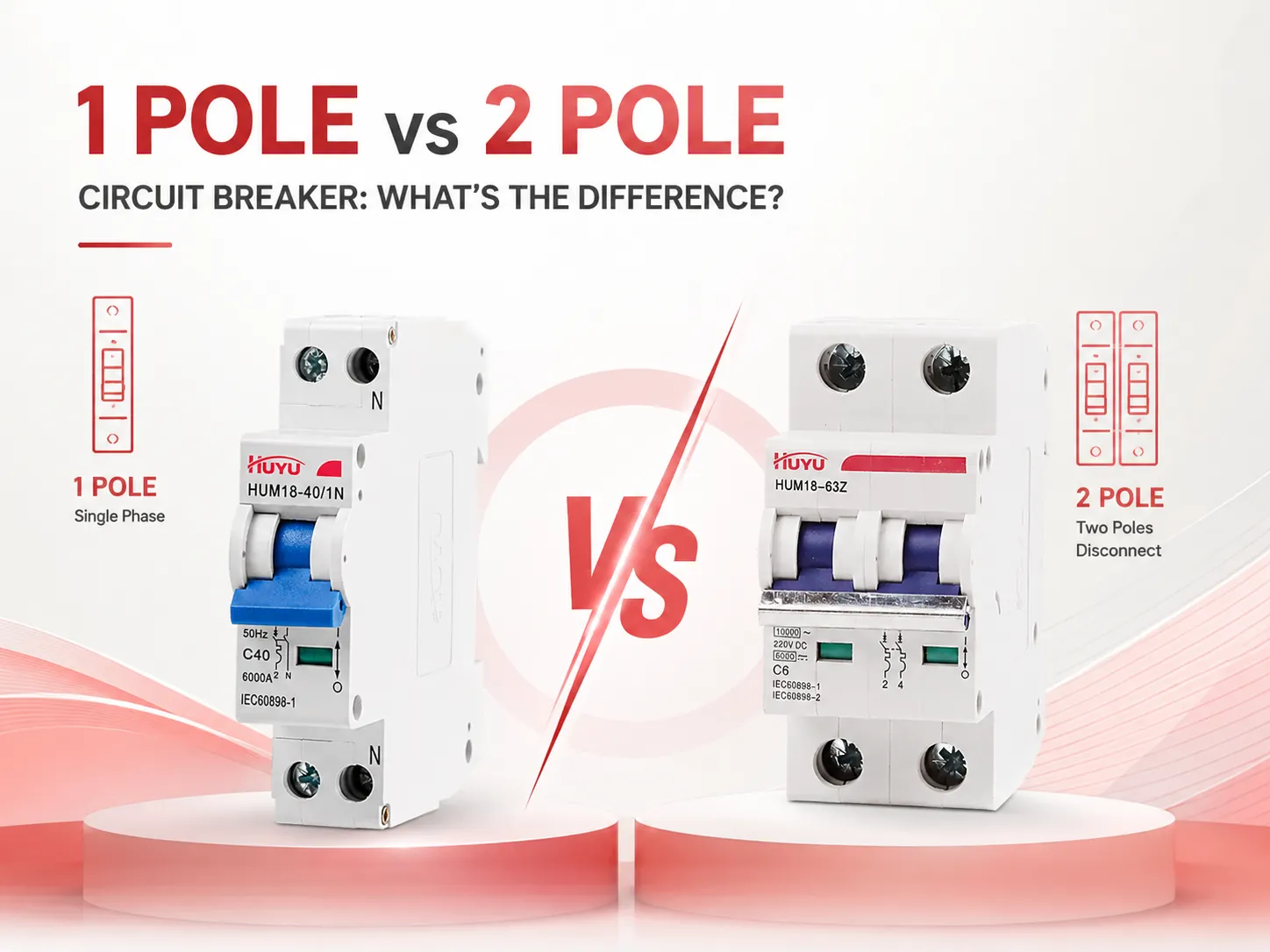
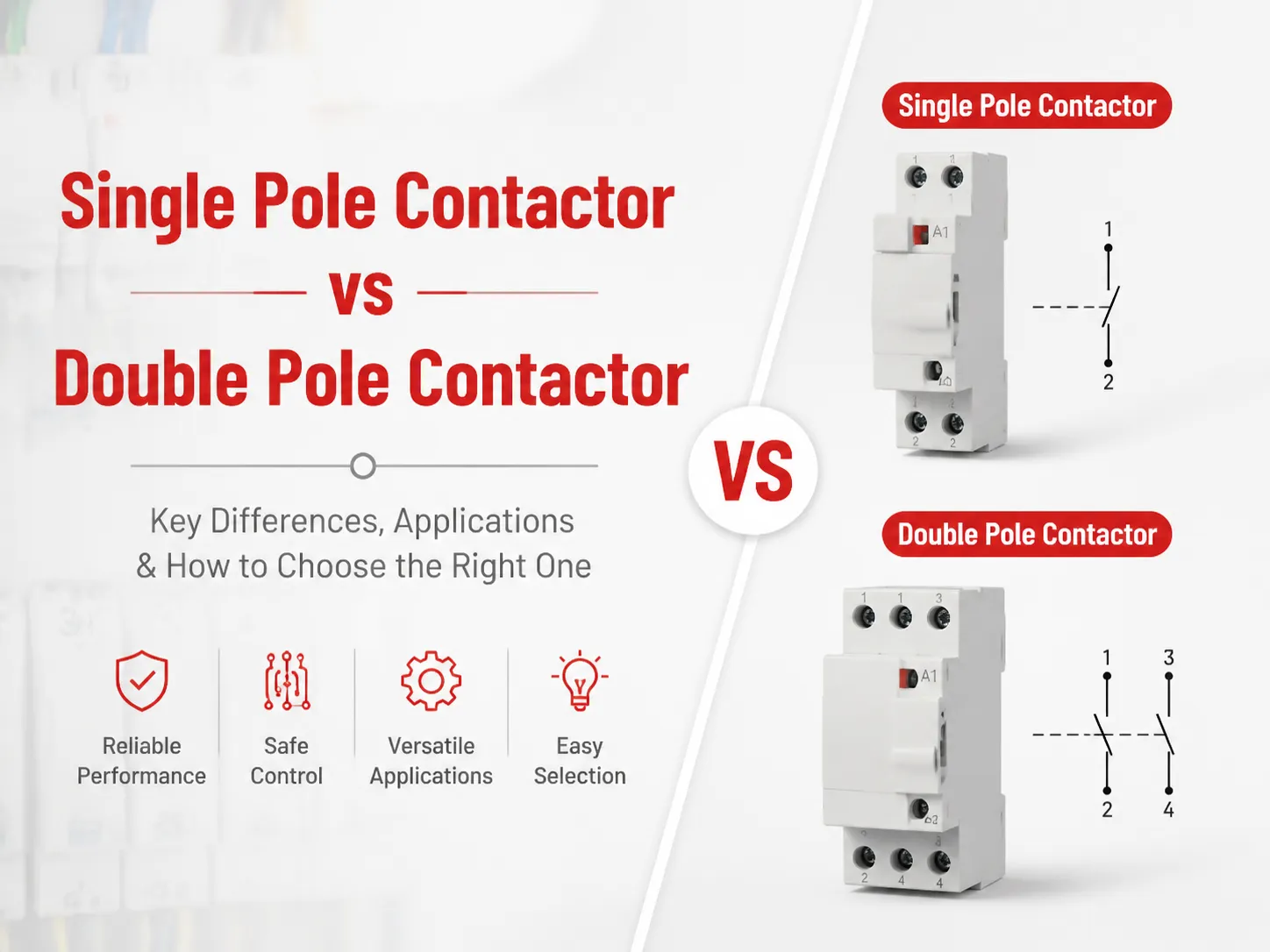
Single pole contactors control one circuit only, and they have one set of power contacts that connect to one phase of the circuit only. This type of contactor is very easy to use and is especially useful for single-phase loads where all that is needed to switch is one leg of power.
- Key Features:
- One (1) normally open (NO) power contact (some models may include a normally closed (NC) contact)
- Rated for currents between 10A and 100A
- Coil voltages: 12V DC, 24V AC, 120V AC, and 240V AC
- Common Applications:
- Residential heating, ventilation, and air conditioning systems (HVAC)
- Electric water heaters
- Single-phase motors (small pumps, fans)
- Lighting control in large commercial buildings
- Price Range: $10–$50 for residential use; $50–$200 for industrial-grade contactors.
- Top Brands: Schneider Electric (Square D), Eaton, Siemens.
Double Pole Contactors – Definition, Application, Specifications
A double pole contactor is designed to control two circuits at once and use two sets of power contacts to open or close two separate phases of a circuit. A single-phase electrical load can be switched by utilizing both hot parts of the circuit or by connecting two different phases of a three-phase circuit.
- Key Features:
- Two (2) normally open (NO) power contacts
- Rated for currents between 10A and 200A
- Coil voltages: 12V DC, 24V AC, 120V AC, and 240V AC
- Common Applications:
- Large single-phase motors (compressors, industrial fans)
- Electric ranges and ovens
- Three-phase motors (small pumps, conveyors)
- Commercial heating and cooling systems
- Price Range: $15–$70 for residential use; $70–$300 for industrial-grade contactors.
- Top Brands: ABB, L&T, WEG.
Single Pole vs Double Pole Contactor: Head-to-Head Comparison
| Feature | Single Pole Contactor | Double Pole Contactor |
|---|---|---|
| Number of Power Contacts | 1 | 2 |
| Circuits Controlled | 1 phase | 2 phases (single-phase) or 2 legs of three-phase |
| Typical Current Rating | 10–100A | 10–200A |
| Best For | Residential HVAC, water heaters, small motors | Large appliances, three-phase motors, commercial HVAC |
| Safety | Only switches one leg of power; load may still have voltage on the other leg | Switches both legs of power, eliminating residual voltage in single-phase systems |
| Price (Residential Models) | $10–$50 | $15–$70 |
How to Test a Contactor: Single Pole & Double Pole
Testing contactors will ensure the contactor is functioning properly. This will help eliminate potential failures when the contactor is not operational. The following steps outline how to test both types:
1. Visual Examination
Look for signs of damage:
Burnt or pitted contact points (indicates arcing)
Corroded terminals
Cracked or melted enclosure
Loose wiring
2. Coil Resistance Test
To test if a coil is open or shorted:
1.Disconnect the power to the contactor.
2.Set a multimeter to the ohmmeter function (200Ω for 12V/24V coils; 2kΩ for 120V/240V coils).
3.Connect the multimeter probes to the coil terminals to measure the resistance. A good coil should show a resistance in the manufacturer’s specified range (e.g., 50–100Ω for a 24V coil, 500–1,000Ω for a 120V coil).
4.If the resistance is infinite (open) or near zero (shorted), the coil is faulty and must be replaced.
3. Power Contacts Test
Testing the power contacts when a coil is activated:
1.Disconnect the load from the contactor but leave the coil powered.
2.Using the continuity setting on your multimeter, touch the probes to the power terminals. The circuit should not have continuity.
3.Activate the control circuit to energize the coil. The contacts should close, and the multimeter should indicate continuity.
4.For double pole contactors, repeat the test for both sets of power contacts.
FAQ: Common Questions About Single Pole & Double Pole Contactors
Can I use a 2-pole contactor for a 1-pole contactor?
Yes, you can use a double pole contactor as a single pole contactor by wiring only one set of power contacts. However, this is more expensive than using a dedicated single pole contactor. Ensure the contactor’s current rating matches the load.
What is the difference between single pole and double pole contactors?
The main difference is the number of power contacts. A single pole contactor controls one circuit, while a double pole contactor controls two circuits. Double pole contactors provide greater safety for single-phase loads by switching both legs of power.
How can I tell if my contactor is 1- or 2-pole?
The label on the contactor will indicate “1P” for a single pole or “2P” for a double pole. You can also count the power terminals: a single pole contactor will have two terminals, while a double pole contactor will have four.
Why use a double pole contactor instead of a single pole?
Double pole contactors are safer for single-phase systems as they switch both legs of power, eliminating residual voltage. They also allow you to control two circuits or certain three-phase loads.
Can a single pole contactor handle three-phase power?
No. A single pole contactor cannot fully switch off three-phase power, which may result in equipment damage. Use a three-pole contactor for such systems instead.
Choosing between a single pole contactor and double pole contactor depends on your load type, safety requirements, and budget. Single pole contactors are affordable and suitable for simple applications like residential HVAC systems. Double pole contactors, while more expensive, provide added security for higher loads and multiple circuits. Always match the contactor’s current rating, coil voltage, and poles to your specific need, and perform routine testing to ensure system reliability. By understanding the key differences outlined here, you can confidently select the contactor best suited for your electrical system, ensuring safety and energy efficiency.